
I come from a world of no mobile phones and only three television channels. Childhood boredom was not an emergency; it was an expectation. Silence was not suspicious; it was normal. Today, I look at the pace, pressure and digital saturation surrounding young people and cannot help but wonder how profoundly modern living is shaping — and straining — developing minds.
At the same time, we are witnessing a sharp and sustained rise in SEND (Special Educational Needs and Disabilities) across the U.K. Classrooms are reporting growing numbers of pupils with autism spectrum conditions, ADHD, speech and language needs, and social, emotional and mental health difficulties. Whether these increases reflect better diagnosis, reduced early intervention, post-pandemic impacts, or deeper cultural shifts, the system is undeniably under pressure.
But there is another change running alongside this trend — one that receives far less attention. Over the past two decades, schools have steadily narrowed access to vocational and technical pathways. Workshop spaces have disappeared. Practical subjects have been squeezed. Performance tables have prioritised academic benchmarks. The message, implicitly or explicitly, has been that success lies primarily through examination routes and university progression.
For many young people, that pathway works. But for many others, particularly those who are neurodiverse, practically minded, or motivated by hands-on learning, it does not. Secondary education has become increasingly structured around written output, abstract reasoning and high-stakes assessment. For a teenager struggling with executive function, attention regulation or anxiety, this environment can magnify difficulties. A student who might thrive building, repairing, designing or problem-solving in a workshop can quickly become labelled disruptive, disengaged or “behind” in a system that prizes academic conformity.
This is not to suggest that schools create SEND. Neurodevelopmental differences are real and longstanding. But it is fair to ask whether a narrow academic model exacerbates those differences — or fails to accommodate them.
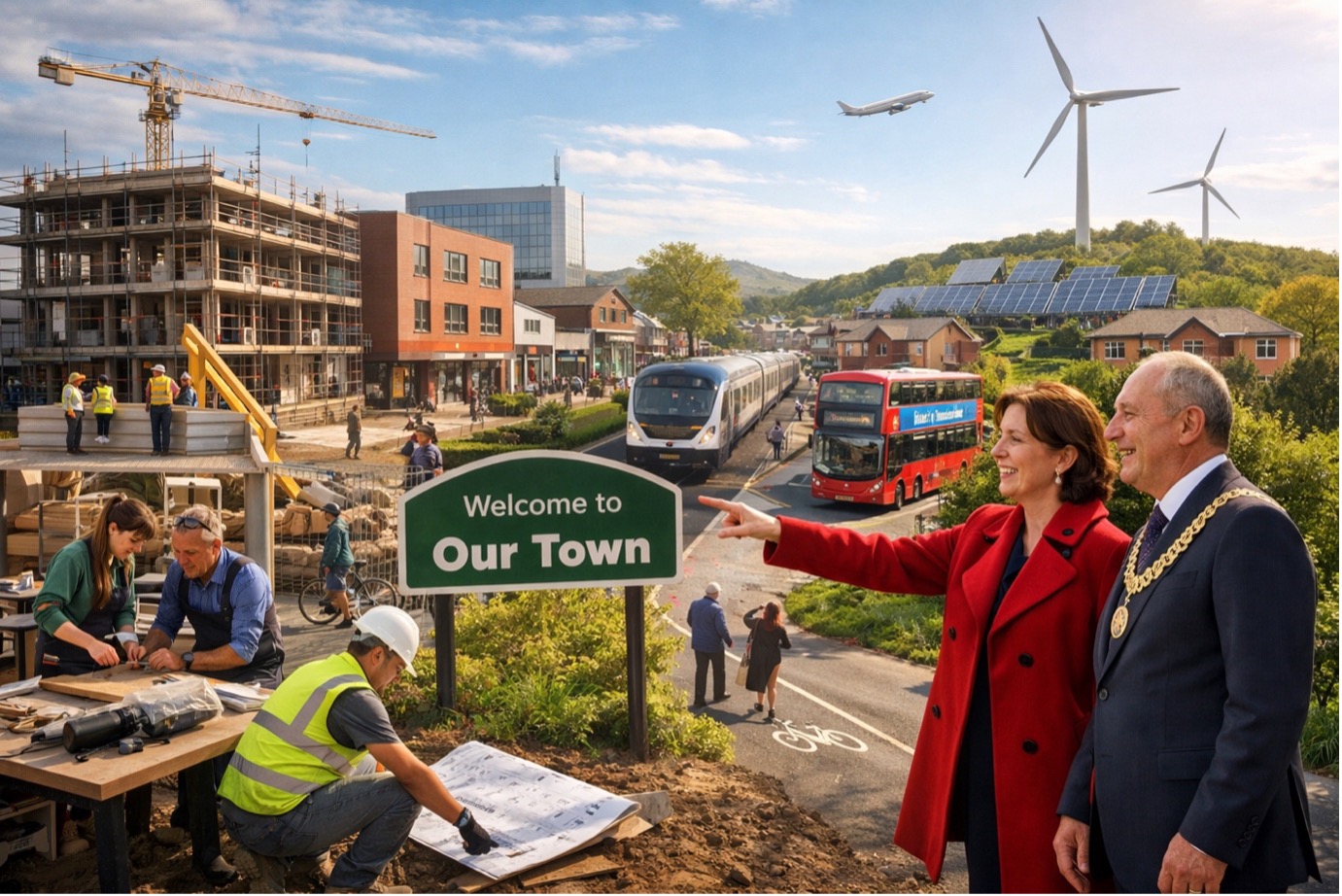
Meanwhile, the labour market is shifting. Across the U.K., there are shortages in construction, engineering, electrical installation, advanced manufacturing, green technologies and digital infrastructure. Skilled trades and technical professions are not fallback options; they are increasingly well-paid, respected and future-proofed careers. In many cases, they offer clearer income progression than oversubscribed graduate pathways. Here lies the paradox: at the very moment vocational skills are becoming economically critical, our educational culture has become more academically compressed. If we are serious about supporting young people — particularly those with SEND — we must rethink what inclusion truly means. Inclusion cannot simply be about additional classroom support within an unchanged academic structure. It must also involve structural diversity in pathways.
A teenager who struggles to sit still for six hours of theoretical instruction may concentrate for hours wiring a circuit or programming a CNC machine. A student who resists essay writing may demonstrate extraordinary spatial intelligence in carpentry or robotics. These are not deficits; they are differences in cognitive profile. Reintroducing meaningful vocational options earlier in secondary education would not be a retreat from standards. It would be an expansion of them. It would recognise that intelligence is plural, that talent is varied, and that economic contribution does not flow solely from academic attainment. It is also likely to greatly impact more success rates in GCSE qualification numbers. Modern living may indeed be attacking young minds — through constant stimulation, social comparison and reduced physical engagement with the real world. Schools alone cannot solve that cultural shift. But they can respond to it.
Supporting rising SEND needs and rebuilding vocational opportunity are not separate challenges. They are intertwined. If we design an education system that values multiple forms of ability, we do not lower expectations. We widen the definition of success — and, in doing so, we may ease pressure on a generation that feels increasingly misaligned with the path laid before it.
The future economy will depend on skilled hands as much as analytical minds. Our education system must be bold enough to nurture both.
About the Author
Adrian Hawkins OBE was awarded his honour by the Queen in the 2021 New Years Day Honours list for his services to business and skills. A lifetime businessman, Adrian Chairs biz4Biz a business support organisation which he founded 15 years ago to create a business network initially in the Home Counties and which is now reaching further nationally. Adrian is also, Chairman of Hertfordshire Futures (previously the LEP) and the Hertfordshire Futures Skills and Employment Board. Adrian is also Chairman of the Stevenage Development Board alongside biz4Biz. Adrian has 50 years’ experience in the world of business and committed a £9 Million to 41 Welder Training facilities resulting in 22,000 Welders at Level 1 being trained.

ADRIAN HAWKINS OBE
Chairman – biz4Biz
Chairman – Hertfordshire Futures Board
Chairman – Stevenage Development Board
Chairman – Hertfordshire Skills & Employment Board